The Candlelit Room Myth: More Light Is Not Always More Atmosphere
Candlelit room lighting feels calmer when contrast, candle placement and other light sources work together, rather than competing for attention.
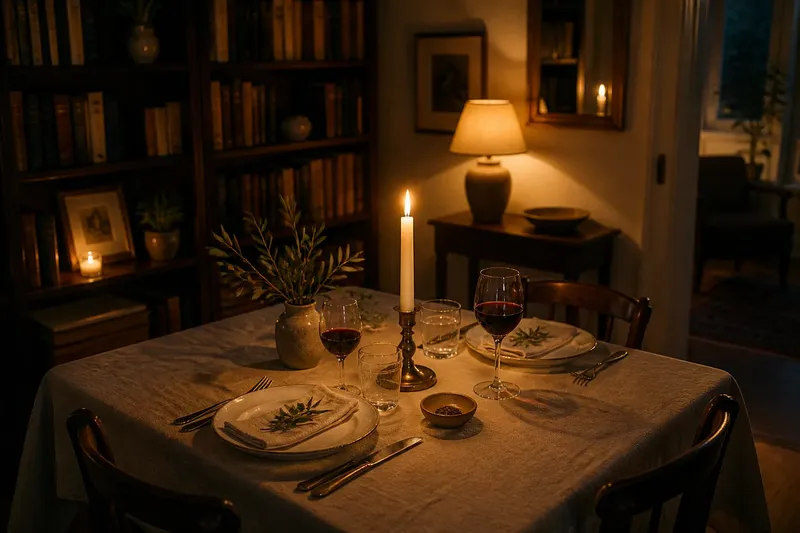
The common mistake with candlelit room lighting is to add candles until the room feels bright enough to use normally. That can erase the contrast that gives candlelight its character, while leaving corners gloomy and faces unevenly lit. A more useful aim is not maximum brightness but a room where the flame, the people and the surrounding shadows can all be read comfortably.
Why can adding candles flatten the mood?
A candle is a small, local light source. Its glow falls away across the room, so nearby objects may look warm and distinct while distant surfaces remain dim. Add several flames around the same table and the brighter area expands; the visual difference between the table and the rest of the room shrinks.
That difference is contrast. It gives the eye a sense of depth: a lit glass catches the flame, a wall recedes, and a face becomes the natural point of attention. If every surface is similarly bright, those relationships are harder to see. The room may be easier to scan, but it can feel less intimate.
There is a practical limit, too. Candlelight often leaves small print, food details and objects in the far side of the room difficult to distinguish. More candles may improve visibility close to them without making the whole room evenly useful. Treating flames as a substitute for all other lighting can therefore create both visual flatness and awkward dark patches.
Where should the candles sit?
Placement determines what the light reveals. A candle set low on a dining table can illuminate hands, plates and the lower part of a face, but may leave eyes in shadow. A flame raised on a stable holder can spread light across faces more evenly, though it may also become the brightest object in the room and draw attention away from conversation.
Look at the room from the seat where people will spend the evening, not only from the doorway. Check whether a flame blocks someone’s face, reflects sharply in a mirror or window, or sits directly in a line of sight. A reflective surface can multiply the appearance of light without improving how comfortably the room is seen.
Say you are setting a small dining table beside a dark bookcase. You place one candle near the centre, then sit in each chair and notice that the flame hides the person opposite and glints in a framed picture. Moving the candle to one end of the table and turning the picture slightly could make faces easier to see while keeping the bookcase in shadow. The useful result is not a brighter room, but a clearer arrangement of attention.
What should other lights do?
Other light sources need not compete with candles. A shaded lamp can provide a soft background glow, making it easier to move through the room while preserving a brighter focus around the table. A ceiling light, by contrast, can spread light broadly and reduce the distinct pools created by flames. Neither choice is automatically wrong; the question is what the room needs people to see.
Try switching off one source at a time and notice what changes. If the room becomes too difficult to cross, a low lamp near a walkway may solve the problem without illuminating every wall. If a lamp washes out the candlelight, moving it behind a chair or using a shade that directs light downwards may restore separation between the table and the rest of the space.
Keep useful light where it serves a task: a lamp for reading, a brighter kitchen area for serving, and gentler light where people are talking. This can make the evening feel more coherent than asking one set of candles to do everything.
How do contrast and placement change what you see?
Why do faces look different by candlelight?
Faces turn towards the strongest nearby light, so a candle below eye level can create shadows under the brow and nose. A candle placed farther to the side can make one person’s face bright and another’s dim; shifting seats or moving the flame may balance the view without adding another light.
Why can a mirror make the room feel brighter?
A mirror reflects a flame and can make it appear that light reaches farther than it does. It may also send a bright reflection directly into someone’s eyes, so view the arrangement from the seats before settling on a position.
Should candles light the whole room?
Usually, a candlelit room works better when candles create a few inviting points rather than uniform brightness. Keep a separate, modest source for movement or close work if the room’s dark areas make those tasks uncomfortable.
How can you tell if there are too many candles?
Look for a crowded line of flames, competing reflections or a table that feels brighter than the people around it. Remove or reposition a candle if it becomes the first thing everyone notices instead of supporting the gathering.
How can you adjust the room without losing its character?
Make changes in a deliberate order. First, decide what the evening involves: conversation, a meal, reading, or a mix. Then place light near the activity that needs it. Finally, reduce or redirect sources that make the room feel uniformly bright or create distracting glare.
- View the room from the seats people will use, not just from the entrance.
- Check whether flames obscure faces or sit in direct sightlines.
- Notice what mirrors, glass frames and polished surfaces reflect.
- Keep a gentle light near routes people need to use.
- Move a candle before adding another one; compare the shadows and reflections.
- Leave some areas dim if they do not need to support conversation or movement.
Use candles only in suitable holders on stable surfaces, away from fabric, draughts and places where they could be knocked; follow the candle maker’s instructions and local fire-safety guidance.
The candlelit room myth is the idea that more flames automatically create more atmosphere. In practice, candlelit room lighting depends on contrast: a visible flame, a comfortable place to look, and enough background light for the room’s purpose. Before adding another candle, change one position or switch one lamp. That small adjustment may reveal more than extra brightness would.